
Place caption here
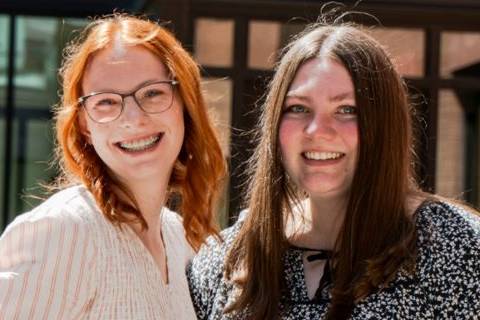
Participation in research as an undergraduate student in the HDFS department is an opportunity for growth and real-world impact. Lindy Strand and Abby Julian presented at the Fall Student Research Symposium on Thursday, December 5, and both note how meaningful and rewarding the experience can be. Lindy described how her journey into research began in a psychology lab, but she ultimately found her place at the Institute for Disability Research, Policy & Practice (IDRPP) thanks to a faculty mentor’s encouragement. Abby’s path started at SUU, where she got involved with research, and continued at Utah State, where she connected with Dr. Ty Aller through an HDFS club event. Both Abby and Lindy have worked with Dr. Aller and Dr. Heather Kelley on a few different projects at the IDRPP, and noted the mentorship they have received has been excellent in guiding their academic and personal growth.
At the Student Research Symposium, Abby and Lindy presented their work with the Valued Living Program, a digital mental health intervention for autistic adults. This program seeks to improve quality of life through teaching acceptance commitment therapy techniques, helping participants align their actions with their personal values. Another project both have worked on, Compassion Compass, offers similar support for individuals with dementia. Both initiatives reflect the transformative impact of the research and provide innovative solutions for communities that are often overlooked. Lindy highlighted how meaningful it was to hear participants’ stories in working with both projects, noting that “small changes in understanding and inclusion can make a big difference.” Reflecting on its impact, Abby shared, “It’s been so cool to see how digital mental health interventions can break down barriers to care and help so many people who might not otherwise have access.”
Lindy and Abby encouraged other undergraduates to embrace research opportunities, emphasizing that the process is far less intimidating than it seems. They both suggested that students start small and find research projects or topics in which they are interested. “Find a project you care about,” Lindy advised. “It’s so much easier and more fun to do research that you’re passionate about.” As Abby shared, "It’s not as scary as it seems—and it’s worth it when you see the difference it can make." Both noted they had strong mentorship through the research process and were able to participate in collaborative environments. Abby and Lindy’s participation in research processes serve as an inspiring reminder that research isn’t just about discovery—it’s about making a difference, one project at a time.