
Doctoral Student Mikaela Drewel Recognized with Commendation for Dissertation Excellence for Traumatic Brain Injury and Alzheimer’s Disease Research
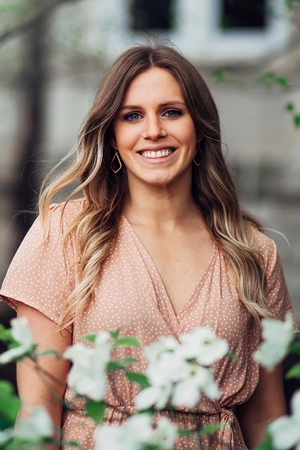 Mikaela Drewel is a doctoral student in the Combined Clinical/Counseling Program in the Psychology Department at Utah State University (USU). Her dissertation research examines the relationship between Traumatic Brain Injury (TBI) and increased risk for Alzheimer’s disease, addressing a critical and growing area of neurological and psychological research. The high quality and impact of her work earned formal recognition from her dissertation committee, including a commendation for dissertation excellence. She is mentored by JoAnn Tschanz, Ph.D., professor of psychology. Now in the final year of her program, Drewel will be completing an internship at the VA Eastern Kansas Healthcare System in Kansas.
Below, Mikaela shares more about her research journey, what inspired her work in the field, and advice for other graduate students.
What inspired your research topic, and what impact do you hope your work will have in your field?
I have a personal connection to TBI. After my cousin spent months in a drug-induced coma following a head injury, he faced a long and difficult process of relearning how to speak and walk. Witnessing his recovery gave me a deep appreciation for the comprehensive approach his medical team used in providing his care.
Later, when I began working with JoAnn Tschanz and her research on Alzheimer’s disease and related cognitive disorders, I noticed TBI represented an important and largely unexplored area within her lab. I started by exploring the existing data she had collected and everything else seemed to fall into place. The relationship between the brain and behavior following an injury is incredibly interesting to me, and I hope to continue to contribute to research in this area.
Your dissertation was recognized by your committee for its exceptional quality. What does this recognition mean to you personally and professionally?
Being nominated and recognized for my work was both unexpected and incredibly rewarding. It shows me that others recognized my contributions to the field and my commitment to this topic. This research has provided a strong foundation for my future clinical career and reinforced my passion for working directly with clients.
Doctoral programs can be both intellectually and personally demanding. What are some of the biggest challenges you have faced during your journey, and how have you overcome them?
The academic world can be incredibly demanding because there is always more work to do, more goals to reach, and infinite ways to measure yourself against others. Midway through my Ph.D., I realized it was unsustainable to tie my self-worth solely to academic achievement. I had to consciously shift my mindset to reconnect with the values and relationships that mattered most to me. Instead of allowing my identity to revolve entirely around being a graduate student, I reminded myself that I was a person in graduate school. That perspective not only helped me navigate challenges of academia more sustainably, but also changed the way I engaged with others in academic spaces. I tried to remind myself, and hopefully encourage others around me, that our value and worth extends beyond academic accomplishment alone.
What’s next for you, and what advice would you offer to future doctoral students?
I’ll be moving to Kansas for my internship at the VA Eastern Kansas Healthcare System, where I will continue my research while working with veterans. Beyond that, I’m excited to be moving closer to home and reconnect with friends and family, maybe even start a family in the near future and continue building a fulfilling life overall. Maintaining a healthy balance between my personal and professional life is very important to me, so my advice and encouragement to future doctoral students would be to remember that your value and worth extends beyond academic accomplishment alone. Be intentional with growing within yourself, make time to explore new hobbies, build friendships, experience new things, and engage in activities that bring you joy. Ultimately, these experiences will benefit your personal well-being and your growth as a scholar and professional.